LinuxPC (Microsoft Windows)Mac2017
Broken Minds
A psychological murder mystery set in 90s Japan.
Trailers
1Screenshots
791
Positive
1 Steam reviews
Review History
| LANGUAGE | AUDIO | SUBTITLES | INTERFACE |
|---|---|---|---|
| English | — | Y | Y |
A psychological murder mystery set in 90s Japan.
Positive
1 Steam reviews
| LANGUAGE | AUDIO | SUBTITLES | INTERFACE |
|---|---|---|---|
| English | — | Y | Y |
Broken Minds is a dark, unconventional visual novel developed and published by LockedOn that leans heavily into psychological tension, fragmented storytelling, and player-driven interpretation. Set in 1990s Japan, the game places the player in the role of Noa Karada, a young woman whose already fragile life becomes increasingly unstable after she is targeted by a serial killer known as The Orphan. Rather than casting the player as a detective solving a crime from a position of control, the game flips expectations by centering the experience on vulnerability, confusion, and emotional unease, making the mystery feel personal and disorienting in ways that set it apart from more traditional genre entries.
The narrative unfolds through a visual novel structure, but it rarely feels passive. Conversations with members of the Yamagata Private Detective Agency form the backbone of the story, and these interactions are filled with strange logic, shifting motivations, and moments where emotional intuition matters just as much as rational deduction. Dialogue choices frequently test the player’s understanding of characters rather than their ability to simply select the “correct” answer. In several key moments, the game challenges players to follow abstract lines of reasoning or emotional logic, reinforcing the sense that this is a story about fractured minds and unreliable perspectives rather than clean, procedural investigation.
What makes Broken Minds particularly distinctive is how it blends narrative choice with interactive reasoning segments. These sections require players to piece together information, anticipate reactions, or align with certain thought processes to progress. Failure does not always mean a dead end; instead, it often leads to alternative outcomes or subtle narrative shifts. This design encourages experimentation and repeat playthroughs, as each decision can slightly alter relationships, reveal new insights, or push the story toward one of several drastically different conclusions. The inclusion of multiple endings gives the story a sense of weight, as it becomes clear that understanding the characters — not just the mystery — is central to reaching satisfying resolutions.
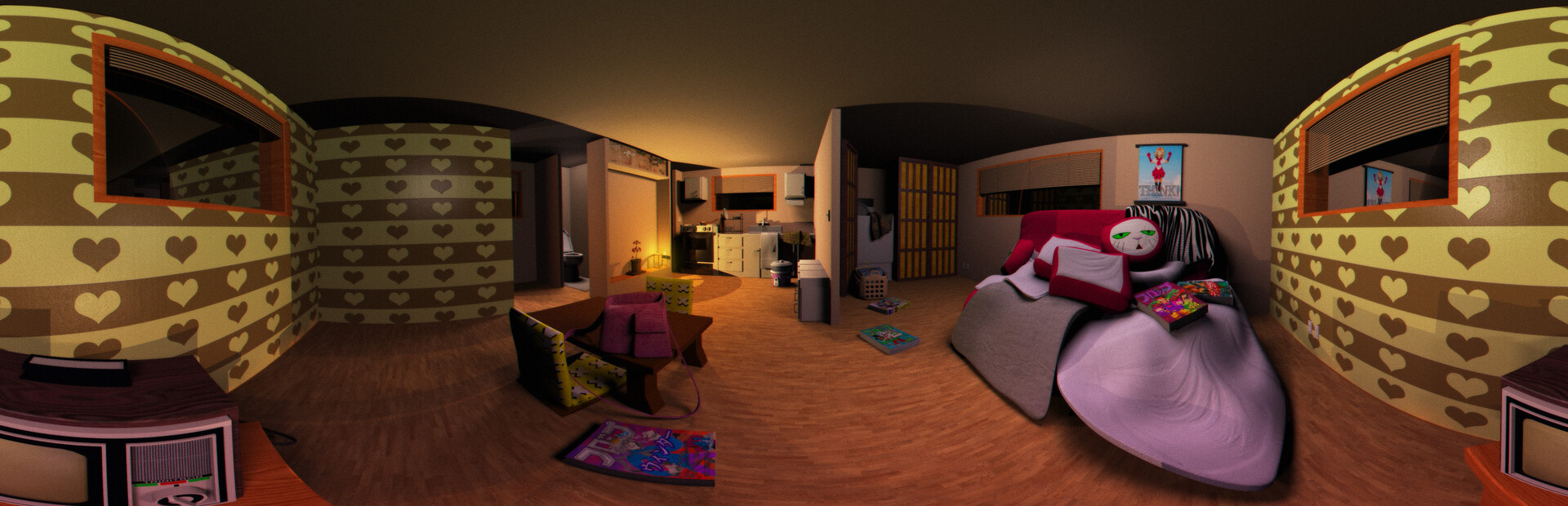
Visually, the game adopts a stylized 2D aesthetic that fits comfortably within visual novel conventions while occasionally stretching them. Character portraits are expressive and sometimes unsettling, reinforcing the psychological themes at play. Certain environments can be examined from different angles, creating a limited sense of spatial exploration that enhances immersion without breaking the format. While the presentation is not technically ambitious, it uses its tools effectively to convey mood, often relying on composition and framing rather than flashy effects to unsettle the player.
Tone is one of Broken Minds’ greatest strengths, but also one of its most divisive qualities. The story frequently veers into uncomfortable territory, blending noir-inspired mystery with existential dread, dark humor, and moments of deliberate ambiguity. Characters are rarely straightforward, and their actions can feel illogical or even contradictory, mirroring the fractured mental states suggested by the game’s title. This refusal to provide easy answers or clear moral grounding can be deeply engaging for players who enjoy psychological narratives, but it may frustrate those expecting a more conventional whodunit with neatly explained motives and solutions.
Audio design plays a subtle but important role in reinforcing atmosphere. The soundtrack, composed specifically for the game, leans into moody, introspective themes that heighten tension without overwhelming the dialogue. Music often fades into the background during key conversations, allowing emotional beats to land naturally, then resurfaces during moments of unease or revelation. This careful use of sound helps ground the story in its era and supports the sense that the player is navigating a world that is constantly on the verge of unraveling.
Replayability is central to the overall experience. A single playthrough rarely provides a complete understanding of the narrative, and the game seems intentionally designed that way. Multiple endings, branching paths, and subtle variations in dialogue encourage players to revisit earlier decisions and explore alternate interpretations of events. A built-in flowchart system helps track progress and makes revisiting specific branches more manageable, reducing frustration while still preserving the complexity of the story structure.
Ultimately, Broken Minds is a visual novel that demands attention, patience, and a willingness to embrace uncertainty. It is not a comfortable or straightforward mystery, nor does it aim to be. Instead, it offers a layered psychological experience that prioritizes character, mood, and thematic exploration over clear answers. For players who appreciate narrative-driven games that challenge perception, blur the line between logic and emotion, and reward multiple playthroughs with deeper understanding, Broken Minds stands as a bold and memorable entry in the indie visual novel space.
Rating: 7/10