PC (Microsoft Windows)2023
Straya
An action based shooter based in Australia where everything wants to kill you.
Storyline
Trailers
1Screenshots
1184
Very Positive
7 Steam reviews
Review History
| LANGUAGE | AUDIO | SUBTITLES | INTERFACE |
|---|---|---|---|
| English | Y | — | Y |
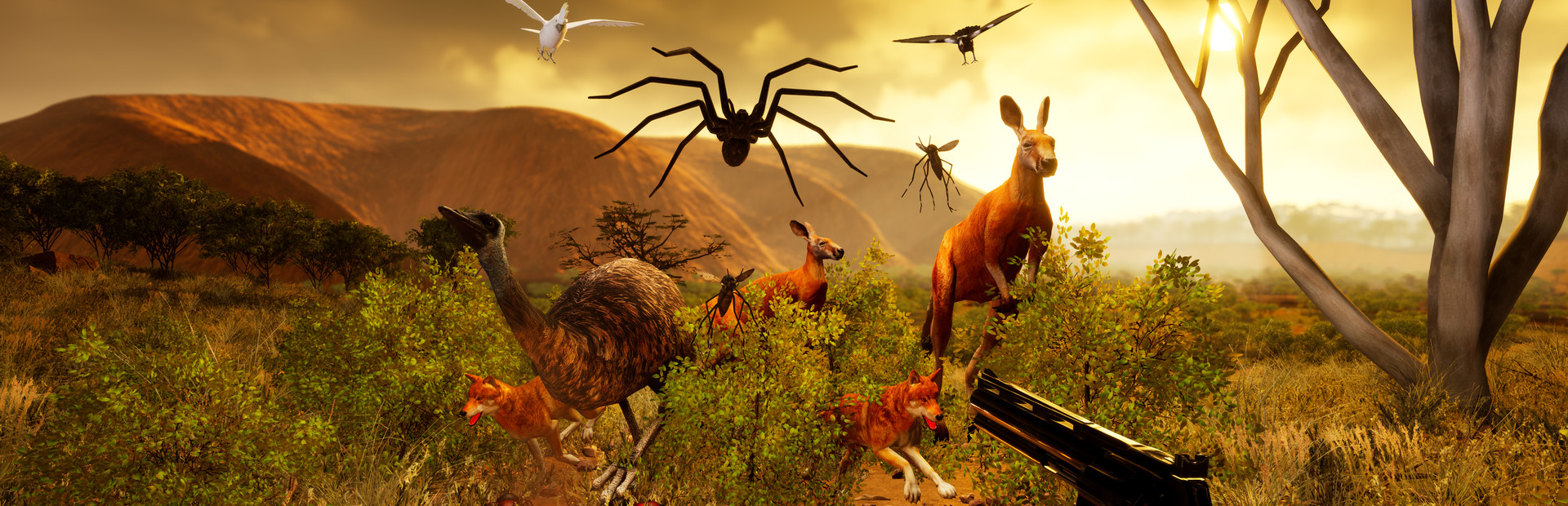
An action based shooter based in Australia where everything wants to kill you.
In the late 1960's, before crocodile hunting was banned, the government had bounties on many animals. Some native to the land, some not. It was during this time many made a living by hunting, and some of the most brave, or foolish, hunted the fierce salt water crocodile, the most aggressive croc in the world. Australia. A land full of wonder and opportunity...to be bitten, poisoned, ripped, killed and probably eaten by nearly everything that moves. It's a harsh but beautiful land, a land down under, a land of myth and legend.
Very Positive
7 Steam reviews
| LANGUAGE | AUDIO | SUBTITLES | INTERFACE |
|---|---|---|---|
| English | Y | — | Y |
very cool game, actually runs well and looks great, better than most games, even on my old gtx780.
Really amazing game by a solo developer. Blown away by the amount of content in this game and the sheer scale of the map. Ripper!
This is definitely a gimmick game. Fun for all of 15 mins. You'd be better off watching a youtube playthrough than wasting money on this.
The game looks nice, but is incredibly boring. Minigames are poorly implemented, and the game comes with very convoluted controls. UI is very simple, and makes it extremeley frustrating to do anything.
I do not recommend this game. Even on sale.
fantastic idea, good layout but a very very average execution. as a very passionate aussie i wanted to enjoy it so badly and i love the genre of game which is how i found it to begin with. glad it was 75% off when i got it but thats still too much for this game
Straya is an open-world survival shooter that commits fully to its setting and theme, presenting a hostile and often unforgiving vision of the Australian outback. Developed and published by Ayrtech, the game places players in a rough, semi-historical interpretation of 1960s Australia, where survival is not just a mechanic but the defining identity of the experience. From the outset, Straya makes it clear that the land itself is your primary adversary, and the constant tension between exploration and danger shapes nearly every moment of play.
At its core, Straya blends first-person shooting with survival and light role-playing systems. Players are free to roam a large open world on foot or using various modes of transport, taking on missions, hunting wildlife, searching for hidden locations, and gathering resources. Unlike many shooters that rely heavily on enemy encounters to drive momentum, Straya derives much of its intensity from unpredictability. A peaceful trek across the bush can abruptly turn deadly due to aggressive wildlife, environmental hazards, or poorly timed encounters. This constant risk gives exploration real weight, making even routine travel feel deliberate and cautious.
Combat is functional and grounded, leaning more toward practicality than spectacle. Firearms are essential tools, but they are not a universal solution, as ammunition management and positioning matter greatly. Different threats require different responses, and careless aggression is often punished. Wildlife encounters in particular demand respect, as enemies can be fast, resilient, and lethal if underestimated. This emphasis on preparation and awareness reinforces the survival tone, encouraging players to think before acting rather than charging headfirst into danger.
Survival mechanics play a meaningful role in reinforcing the game’s atmosphere. Gathering food, crafting consumables, and brewing elixirs from local plants are essential for maintaining health and readiness. Activities like fishing, gold panning, and scavenging provide alternative paths for progression and income, giving players reasons to engage with the environment beyond combat. These systems are simple but effective, supporting the idea that survival in Straya is about persistence and adaptation rather than complex micromanagement.
Exploration is one of the game’s strongest aspects, but it is also one of its most demanding. The open world is filled with points of interest, secrets, and references to local mythology and folklore, rewarding players who are willing to venture off the beaten path. However, guidance is intentionally limited, and objectives are not always clearly signposted. This design choice reinforces immersion but can also lead to confusion or frustration, especially when searching for specific locations or mission objectives. The game expects patience and attentiveness, and players who prefer constant direction may find the experience challenging.
Visually, Straya favors atmosphere over polish. The environments capture a sense of isolation and ruggedness that suits the setting, even if the presentation occasionally feels rough around the edges. Lighting and ambient sound design do a great deal of work in establishing mood, particularly during long stretches of travel or sudden encounters in the wilderness. While not technically cutting-edge, the visual style effectively conveys a world that feels dangerous, sparse, and indifferent to the player’s survival.
The game’s difficulty and death penalties further reinforce its uncompromising design philosophy. Mistakes can result in significant setbacks, including the loss of progress or equipment, which heightens tension but can also be discouraging. These systems underscore the survival focus but may feel overly punishing to players accustomed to more forgiving open-world games. Over time, learning the game’s rhythms and dangers becomes part of the experience, turning frustration into hard-earned familiarity.
What ultimately sets Straya apart is its dedication to its concept. It does not try to soften its edges or appeal to everyone, instead embracing a specific vision of survival driven by environment, risk, and resilience. For players who enjoy open-world games where exploration feels dangerous and survival must be earned, Straya offers a distinctive and memorable experience. While it has its rough spots and demands patience, its strong sense of place and commitment to challenge make it stand out as a survival shooter that dares to be unapologetically harsh.
Rating: 7/10
Absolutely recommended - it may have an underwhelming first impression, but the game is excellent and a fantastic achievement for a 1-person dev team.
Love it, everything does try to kill you, how ever when you have a shotgun....
Great gameplay, heaps of quests etc to keep you playing. Just remember to take heaps of healing elixir...you will need it
Love this game and concept, the devs have kept current and kept it awesome