LinuxPC (Microsoft Windows)MacWii UNintendo Switch2016
Reptilian Rebellion
Stop the New World Order in this challenging game!
Trailers
1Screenshots
11Review History
| LANGUAGE | AUDIO | SUBTITLES | INTERFACE |
|---|---|---|---|
| English | — | — | Y |
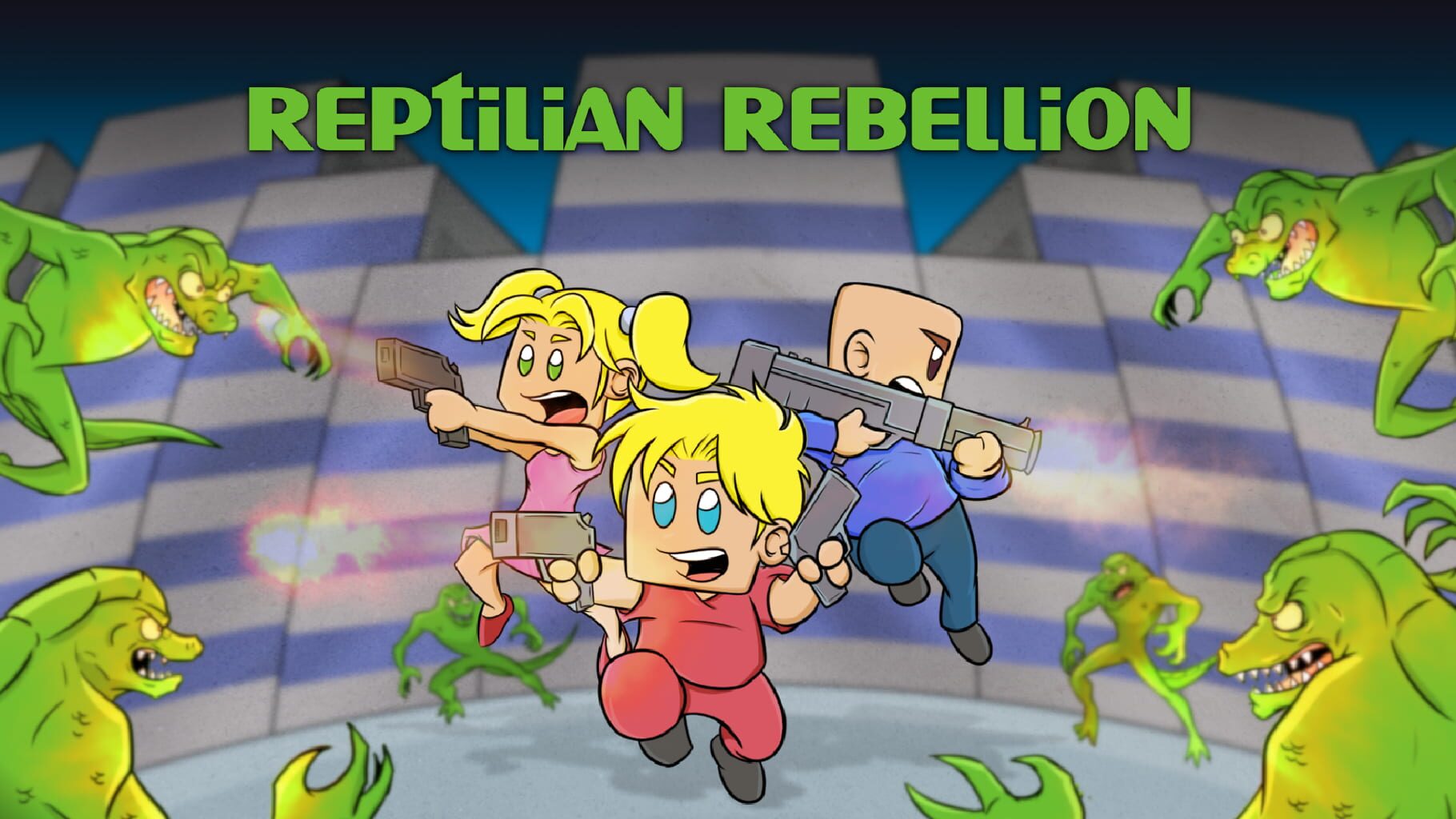
Stop the New World Order in this challenging game!
| LANGUAGE | AUDIO | SUBTITLES | INTERFACE |
|---|---|---|---|
| English | — | — | Y |
Not great and very easy to skip. If you just want to kill a tiny bit of time, sure, but I’d recommend finding something else.
Reptilian Rebellion, developed and published by Herrero Games, is a tongue-in-cheek arcade shooter that captures the spirit of old-school simplicity while wrapping it in an offbeat conspiracy theme. The premise is absurd in the best way possible—Earth has been invaded by shape-shifting reptilian creatures disguised as world leaders and citizens, and it’s up to you to eliminate the threat. It’s a straightforward concept that leans into its own silliness, offering fast, repetitive bursts of action rather than deep mechanics or narrative. The game feels like a throwback to the days when score-chasing and survival were the core motivators, relying on reflex-driven gameplay, increasingly frantic waves, and the satisfaction of pure repetition.
The gameplay of Reptilian Rebellion revolves around a simple loop: survive against endless hordes of enemies while racking up as many kills as possible. You control one of several unlockable characters, each with their own movement speed, health, and weapon behavior, and must navigate small arenas filled with reptilian attackers. Shooting feels immediate, and movement is quick but deliberate. The arenas are tight, emphasizing positioning and resource management. Ammo is limited, forcing you to make every shot count and grab power-ups when they appear. These mechanics lend the game a layer of tactical tension that contrasts nicely with its chaotic exterior. As you progress, waves become faster, enemy numbers swell, and hazards multiply, transforming what begins as an easy shooting spree into a hectic dance of evasion and precision.
What makes the game engaging, at least in short sessions, is how it embraces unpredictability through small but meaningful variations. Hazards such as falling debris, explosions, and “chem trails” periodically disrupt the battlefield, altering your tactics mid-run. Some of these are designed to trip you up—for example, control inversions that suddenly flip your movement directions, forcing you to adapt quickly or risk being overwhelmed. The unpredictability keeps the action lively but can also border on frustrating when bad luck feels like the deciding factor. Still, the game maintains a playful sense of challenge that encourages replay, especially for players who enjoy shaving seconds off their survival time or climbing the leaderboards. It has that addictive “one more round” energy that defines most good arcade experiences.
Visually, Reptilian Rebellion adopts a blocky, low-polygon aesthetic that looks crude at first glance but ultimately fits the game’s tone. Everything from the character models to the reptilian enemies has a cartoonish stiffness that underscores the game’s satirical theme. The environments are simple but readable, and the use of color keeps the screen clear even as chaos erupts. It may not be pretty by modern standards, but its visual directness ensures functionality over flash. The same can be said for the soundtrack, which uses fast-paced, looping tunes to create a sense of urgency without overstaying its welcome. Sound effects—particularly gunfire, explosions, and enemy grunts—are exaggerated and arcade-like, reinforcing the game’s unapologetically old-fashioned identity.
As an indie title, Reptilian Rebellion is clearly built around accessibility and immediacy rather than depth. It takes only moments to understand, but mastery comes from learning how to control the pace of the battle. The inclusion of multiple playable characters adds a bit of variety, as each has slightly different traits affecting playstyle. For example, some characters move faster but have weaker attacks, while others trade speed for higher firepower or durability. Unlocking these characters is part of the game’s long-term incentive, alongside a small set of Steam achievements and leaderboard challenges. The game rewards consistency and experimentation, and while its mechanics remain basic throughout, it manages to sustain short bursts of engagement by offering just enough variety between characters and runs.
Despite its charm, the game is not without flaws. The same simplicity that makes it accessible also limits its longevity. Once you’ve unlocked the available characters and experienced the different stages, there isn’t much left to discover beyond chasing higher scores. The repetitive gameplay loop, combined with the lack of substantial progression or variety in enemy design, means that the excitement begins to fade after a few hours. Certain hazards—especially the sudden control reversals—can feel more annoying than challenging, breaking rhythm and flow in ways that seem arbitrary rather than cleverly designed. The hit detection and collision can also feel inconsistent at times, occasionally causing cheap deaths. These issues don’t ruin the experience but highlight its rough, budget-friendly nature.
From a technical standpoint, Reptilian Rebellion runs smoothly and loads quickly, even on low-spec systems. It’s the kind of game that demands very little from your hardware, which makes sense given its minimalist design. The user interface is sparse but functional, though a few quality-of-life features—such as the ability to exit mid-round or remap controls—would have made the experience more comfortable. Given its size and price point, these omissions are understandable but still noticeable. What helps offset them is the sense of humor that permeates the game. The reptilian conspiracy theme is clearly not meant to be taken seriously, and its self-aware absurdity gives it a certain charm. The combination of cheesy enemies, silly animations, and fast-paced gameplay captures the essence of low-cost indie creativity.
Reptilian Rebellion is ultimately a compact, self-contained arcade shooter that knows exactly what it wants to be. It doesn’t reach for depth or innovation but instead focuses on the timeless satisfaction of shooting waves of enemies and pushing for one more run. Its humor and simplicity make it enjoyable in short bursts, and its straightforward mechanics mean anyone can jump in and understand it immediately. However, the lack of progression systems or evolving challenges limits its long-term appeal. It feels like a game designed for players who appreciate arcade-style quickplay sessions rather than those seeking extended engagement or intricate design.
In the end, Herrero Games delivers a project that, while unpolished and short-lived, carries the heart of an old-fashioned arcade experience. It’s a quirky blend of satire and shooter, the kind of game that thrives on its personality rather than its production value. There are moments of genuine tension when the screen fills with reptilian invaders, and the satisfaction of surviving just a few seconds longer is tangible. Though it may not offer much depth or replayability, Reptilian Rebellion succeeds in delivering a brief, chaotic burst of entertainment that feels both nostalgic and refreshingly direct. For players looking for a simple, tongue-in-cheek shooter that doesn’t take itself seriously, it’s a modest but worthwhile diversion that embraces its own rough edges and revels in its arcade roots.
Rating: 5/10
💋