PC (Microsoft Windows)2016
PlanCon: Space Conflict
Damn aliens! The choice is: the Universe — or nothing!
Screenshots
533
Mostly Negative
1 Steam reviews
Review History
| LANGUAGE | AUDIO | SUBTITLES | INTERFACE |
|---|---|---|---|
| English | Y | Y | Y |
| Russian | Y | Y | Y |
Damn aliens! The choice is: the Universe — or nothing!
Mostly Negative
1 Steam reviews
| LANGUAGE | AUDIO | SUBTITLES | INTERFACE |
|---|---|---|---|
| English | Y | Y | Y |
| Russian | Y | Y | Y |
PlanCon: Space Conflict sets out to offer a wide-open, choice-driven space RPG where you pilot your own ship, shape your destiny among planets and stations, and confront an alien threat that has torn apart your training facility and thrust you into a galaxy-wide war. Developed and published by HeroLabs, the game blends space combat, exploration, trading, and role-playing systems in a way that suggests an ambitious vision—one where you can become a merchant, a pirate, a soldier, or something in between. The premise is immediately appealing: you emerge as the lone survivor of an ambush and must carve out a place in a hostile universe while upgrading your ship, forming alliances, and deciding whether to help the desperate planetary defense efforts or pursue your own rogue agenda.
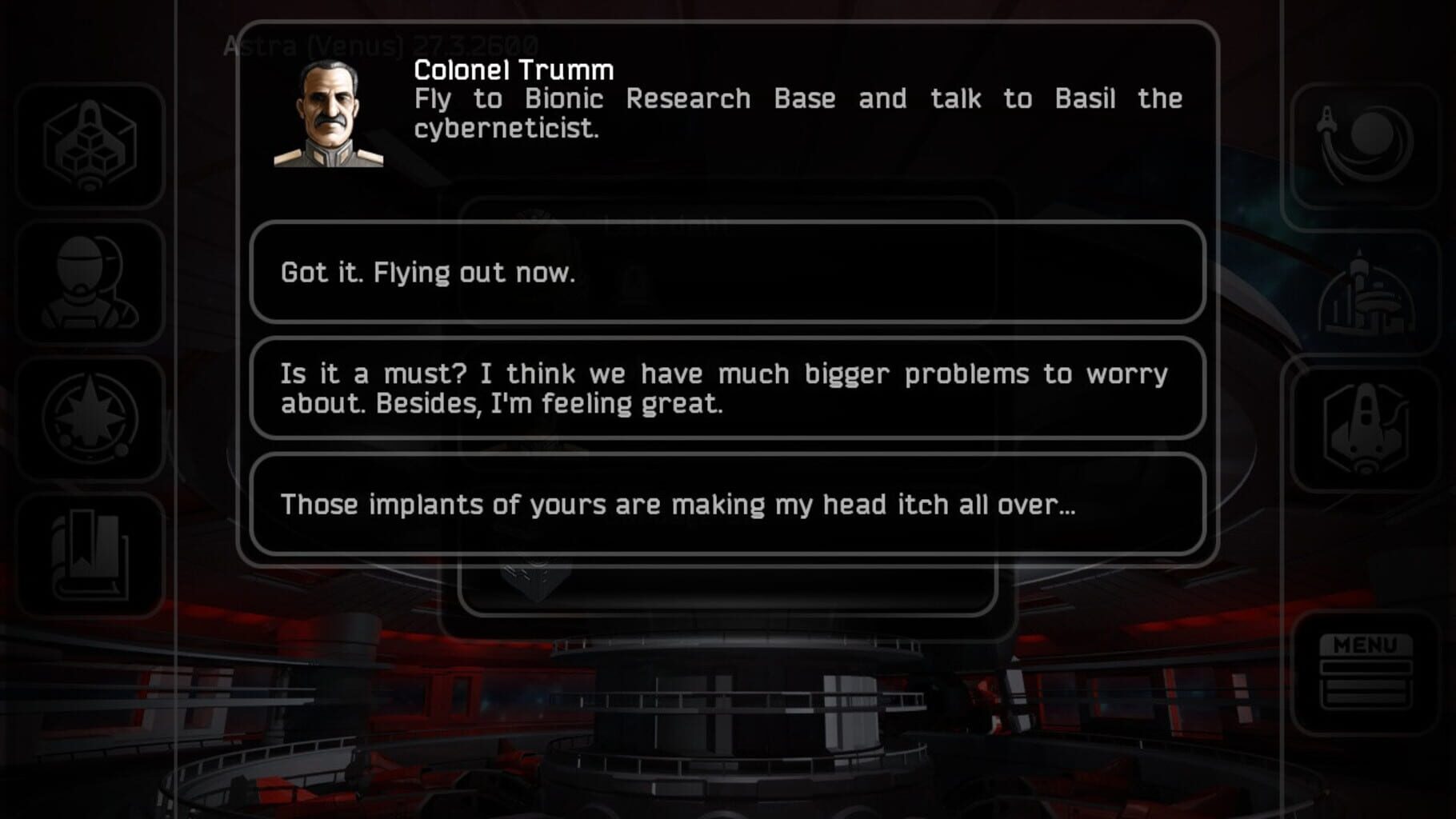
The presentation carries a retro-styled charm with its mix of 2D and 3D elements. Space stations, ships, and planetary backdrops have a colorful, sometimes vibrant look that creates a sense of scale as you travel across the star map. The game’s interface includes a variety of menus for equipment, quests, trade goods, and crew management, and although visually busy, it hints at the depth the game tries to achieve. Battles play out in real time, with your ship gliding across the screen as you fire lasers or missiles at alien raiders and opportunistic pirates. There’s a modest amount of spectacle—explosions, laser flashes, and debris—but the core attraction comes from customizing your vessel and watching it grow from a fragile starter craft into something sturdier and more capable.
In terms of structure, PlanCon is built around freedom of approach. You can travel to multiple planets, take jobs from different factions, scavenge ruins, participate in space battles, or simply run cargo between markets in search of profit. Ship upgrades form a major pillar of progression: engines, weapons, shields, and support modules all provide incremental improvements that make your journey easier. The game also allows for station ownership, crew recruitment, and branching narrative choices, adding layers of RPG flavor. For players who enjoy tinkering with builds and slowly transforming a vulnerable ship into a floating war machine, the systems are intriguing and provide a strong reason to keep exploring.
However, while the vision is impressive, the execution often falls short of what the concept promises. The game’s interface is cluttered and sometimes unintuitive, leading to confusion during the tutorial and early missions. Navigation can feel awkward, as moving between planets requires constant engine upgrades just to meet travel requirements—progression that feels more restrictive than empowering. Combat, while serviceable, lacks finesse and can feel repetitive due to limited enemy variety and simplistic encounter design. Missions also tend toward formulaic “travel here, fight this, return there” loops, which diminishes the sense of discovery that a space RPG should evoke.
Technical and design issues further complicate the experience. Bugs, inconsistent UI behavior, and unclear instructions crop up frequently, and some players may find themselves stuck on basic tasks simply because the game does a poor job of explaining its mechanics. Planets and stations often feel like static menus rather than living environments, and the story—despite its dramatic setup—never fully capitalizes on its potential. The pacing suffers as well; the early hours can feel like a grind as you repeat simple missions to earn enough credits to purchase essential upgrades. These shortcomings collectively prevent the game from reaching the level of immersion and dynamism that its genre peers often achieve.
Yet, for all its flaws, PlanCon: Space Conflict holds a certain appeal for players who enjoy exploring underappreciated or rough-around-the-edges space games. It offers glimpses of a grand adventure, with just enough systems, customization options, and open-ended structure to keep curious players experimenting. Those who appreciate tinkering with builds, overcoming janky controls, and watching a small project reach toward a larger vision may still find moments of enjoyment. But it requires patience, tolerance for clumsy interfaces, and a willingness to overlook uneven design.
In the end, PlanCon: Space Conflict is a game full of ambition that doesn’t quite manage to translate its ideas into a polished or cohesive whole. It gestures toward epic spacefaring potential—freedom of choice, customizable ships, branching roles—but the execution is too inconsistent to fully deliver on that promise. For dedicated fans of space RPGs willing to embrace imperfections, it may still offer enough charm and variety to be worth exploring. For others seeking a smoother or more refined experience, it stands as a reminder that strong ideas need equally strong implementation to truly shine.
Rating: 4/10