Bullet Party
The party co-op shoot ’em up! Become the king of the night club alone or group your friends and shoot the party crashers down !
Screenshots
5Very Positive
1 Steam reviews
Review History
| LANGUAGE | AUDIO | SUBTITLES | INTERFACE |
|---|---|---|---|
| English | Y | Y | Y |


The party co-op shoot ’em up! Become the king of the night club alone or group your friends and shoot the party crashers down !
Very Positive
1 Steam reviews
| LANGUAGE | AUDIO | SUBTITLES | INTERFACE |
|---|---|---|---|
| English | Y | Y | Y |
BULLET PARTY, developed and published by Awoker Games, is a fast-paced top-down twin-stick shooter designed to deliver arcade-style action in short, intense bursts. Built around reflex-driven gameplay and cooperative chaos, the game focuses on accessibility and rapid progression rather than complex systems or narrative depth. Its straightforward premise—survive waves of enemies across a large number of bite-sized levels—makes it easy to pick up, but its escalating difficulty ensures that mastery requires precision and awareness.
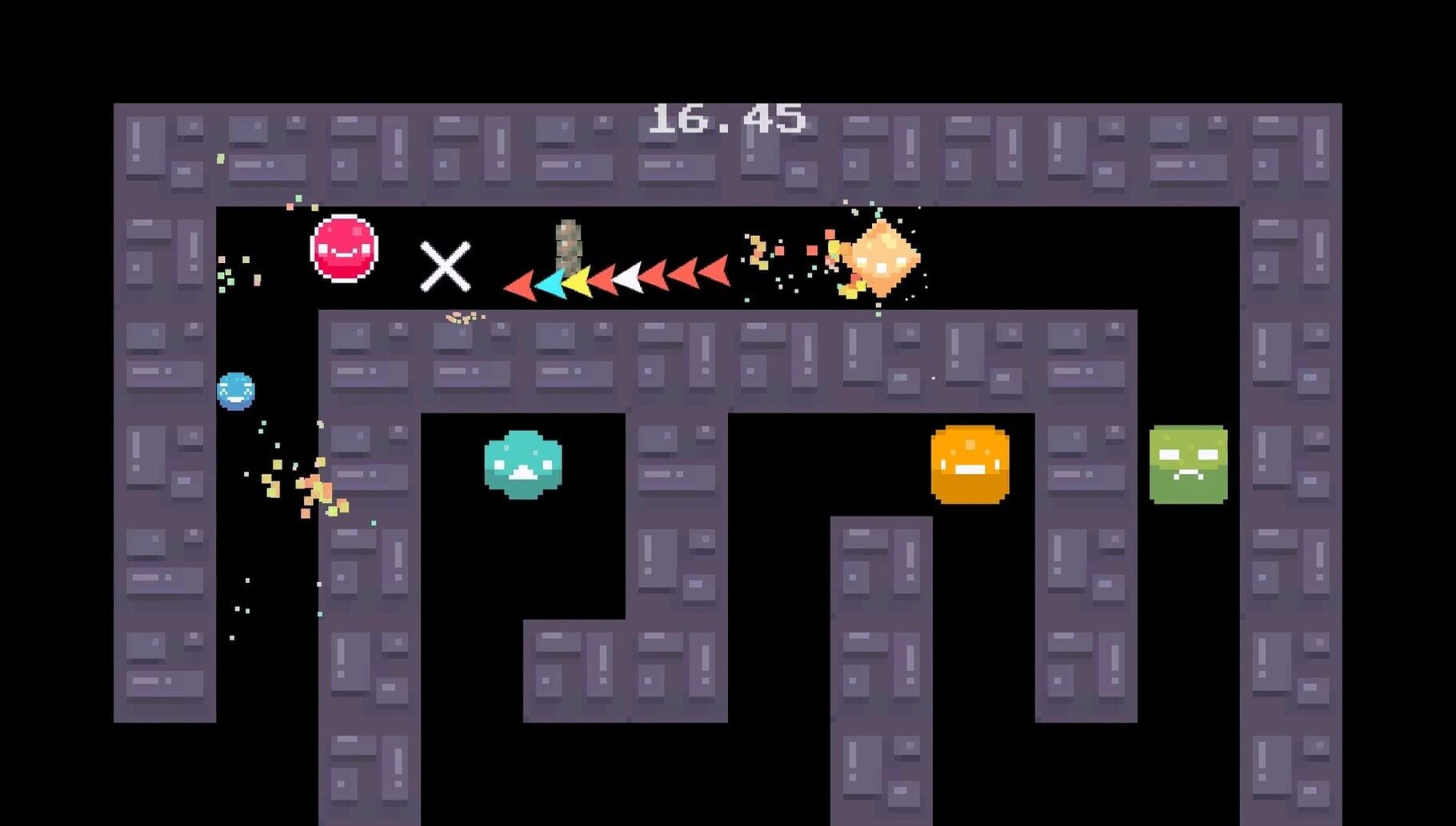
At its core, BULLET PARTY emphasizes movement and shooting fluidity. Players control a character in an overhead arena, using one stick to maneuver and another to aim and fire. The twin-stick control scheme feels intuitive, allowing players to quickly adapt whether playing solo or in local co-op mode. The pace is brisk, with enemies spawning in increasingly aggressive patterns that force constant repositioning. Success depends on maintaining spatial awareness, avoiding incoming projectiles, and clearing threats efficiently before the screen becomes overwhelmed.
The game offers an impressive number of levels, structured to keep gameplay fresh through variety rather than dramatic mechanical changes. Each stage introduces different enemy arrangements, movement patterns, and environmental layouts. Some levels focus on endurance and survival, while others test speed and efficient execution. This rapid rotation of scenarios keeps the experience dynamic and prevents monotony from setting in too quickly. The relatively short duration of each stage reinforces the “one more run” mentality common to arcade-inspired shooters.
Local multiplayer is one of BULLET PARTY’s strongest features. Supporting up to four players on the same screen, the game transforms from a solo challenge into a lively cooperative experience. Coordination becomes crucial, as overlapping enemy waves can quickly overwhelm unprepared teams. The presence of mechanics like shared bomb effects or support features keeps eliminated players engaged, preventing downtime during cooperative sessions. In a party setting, the game’s chaotic firefights often become as entertaining for spectators as for participants.
Visually, BULLET PARTY adopts a retro-inspired aesthetic that prioritizes clarity over elaborate detail. Environments are brightly colored and stylized, with clean outlines that make enemies and projectiles easy to distinguish amid intense action. Explosions and particle effects add visual energy without cluttering the screen. The overall presentation captures a classic arcade feel, complemented by energetic music tracks that maintain momentum during high-intensity moments.
One notable aspect of the game is its adjustable pacing. Certain systems subtly respond to player performance, increasing or decreasing intensity to maintain engagement. This flexible approach helps smooth out potential difficulty spikes, ensuring that newcomers are not immediately overwhelmed while still offering seasoned players escalating challenges. The learning curve is approachable, but high-level play demands quick reflexes and strategic bomb usage.
Despite its strengths, BULLET PARTY remains focused on its core loop without extensive long-term progression systems. There are no deep skill trees or narrative campaigns driving the experience forward. Replayability primarily stems from score-chasing, achievement hunting, and cooperative competition. While this simplicity aligns with its arcade roots, players seeking expansive progression or online multiplayer options may find the scope limited once all levels have been completed.
Ultimately, BULLET PARTY succeeds by delivering exactly what it promises: energetic, arcade-style twin-stick shooting in a compact and accessible package. Its responsive controls, large selection of levels, and strong local co-op support make it particularly enjoyable in group settings. While it does not redefine the genre or introduce groundbreaking mechanics, it stands as a solid example of focused indie design that values immediacy and replayability over complexity. For fans of classic top-down shooters and couch co-op chaos, BULLET PARTY offers a lively and satisfying experience.
Rating: 8/10