PC (Microsoft Windows)Mac2020
Rock Paper Sock
Rock Paper Sock is a realtime, online rock paper scissors game & chill zone!
Trailers
1Screenshots
222
Mostly Negative
1 Steam reviews
Review History
| LANGUAGE | AUDIO | SUBTITLES | INTERFACE |
|---|---|---|---|
| English | Y | Y | Y |
Rock Paper Sock is a realtime, online rock paper scissors game & chill zone!
Mostly Negative
1 Steam reviews
| LANGUAGE | AUDIO | SUBTITLES | INTERFACE |
|---|---|---|---|
| English | Y | Y | Y |
Sokpop S09: Rock Paper Sock is one of the more eccentric and experimental releases from the Sokpop Collective, a studio known for rapid-fire indie projects that often explore unusual mechanics in playful, minimalist ways. True to that spirit, this game takes the universally familiar concept of rock–paper–scissors and attempts to expand it into a shared, online, social experience with light RPG elements. Rather than presenting a tightly structured single-player loop, Rock Paper Sock positions itself as a communal space where interaction, novelty, and casual competition are meant to be the main attractions.
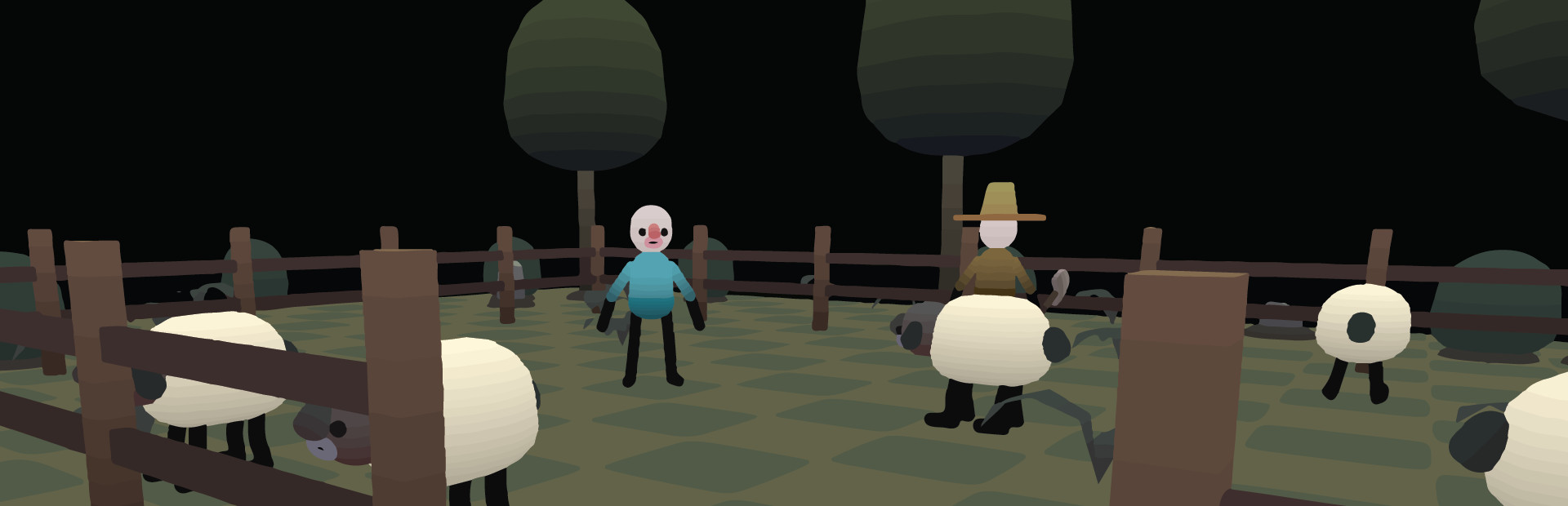
At its core, the game revolves entirely around rock–paper–scissors as the primary method of conflict and progression. Players enter a whimsical fantasy world populated by animals, villagers, and other strange characters, all of whom engage in this simple hand-game mechanic to resolve encounters. Winning or losing matches affects your progress, allowing you to level up individual rock, paper, and scissors attributes. This adds a small layer of strategy, as outcomes are no longer purely random, but influenced by how you’ve developed your character over time. Still, the fundamental simplicity of the mechanic remains front and center, and the game never pretends to be more complex than its foundation allows.
Progression in Rock Paper Sock is tied to light RPG-style systems. As you win encounters, you gain experience, unlock cosmetic items, and collect gear that subtly modifies your effectiveness in matches. These elements give players a reason to continue engaging beyond the novelty of the premise, but they are intentionally shallow. The game does not aim to deliver deep character builds or long-term optimization; instead, progression serves more as a gentle nudge toward continued play and experimentation. This design choice aligns with Sokpop’s broader philosophy of creating small, self-contained ideas rather than sprawling systems.
The multiplayer aspect is central to the game’s identity. Rock Paper Sock is designed as an always-online experience where players can encounter others in real time, chat, and challenge each other to matches. In theory, this creates a relaxed social environment where competition is lighthearted and interactions are as important as winning. In practice, this reliance on online connectivity becomes one of the game’s most significant weaknesses. Technical instability, login issues, and inconsistent player populations have often undermined the experience, making the world feel empty or inaccessible at times. For a game so dependent on shared presence, these issues significantly affect its appeal.
Visually, the game fits comfortably within Sokpop’s established aesthetic. The art style is simple, colorful, and charming, with low-poly characters and environments that feel playful rather than detailed. This visual approach complements the game’s casual tone and makes the world feel approachable, even childlike. The whimsical presentation helps soften the inherent repetitiveness of the core mechanic, and there is undeniable charm in seeing fantastical creatures resolved through something as mundane as rock–paper–scissors. However, this charm alone is often not enough to sustain long play sessions.
In terms of pacing and engagement, Rock Paper Sock struggles to maintain momentum. The novelty of the concept is strong initially, but once the basic loop is understood, the experience can begin to feel repetitive. Because encounters are built around a fundamentally simple mechanic, variety relies heavily on player interaction and the social layer. When that layer is thin or absent, the game’s systems feel exposed, revealing a lack of depth compared to some of Sokpop’s stronger titles that successfully elevate minimal mechanics into compelling long-term loops.
Compared to other entries in the Sokpop catalog, Rock Paper Sock feels more like an experiment than a fully realized idea. While many Sokpop games are intentionally small, they often demonstrate a clear mechanical hook that sustains interest through clever constraints or emergent behavior. Here, the ambition to create a social, online rock–paper–scissors world is admirable, but the execution does not fully support that vision. Technical roughness, shallow progression, and reliance on an active player base limit its longevity and accessibility.
Ultimately, Sokpop S09: Rock Paper Sock is a curious outlier within the collective’s body of work. Its premise is imaginative and undeniably memorable, but its dependence on online functionality and its limited mechanical depth prevent it from reaching the heights of Sokpop’s more celebrated experiments. For players who enjoy quirky multiplayer concepts, social spaces, and the collective’s distinctive charm, it may still offer a brief and amusing diversion. For others, it stands as an example of how even a clever idea can struggle when simplicity and ambition are not perfectly aligned.
Rating: 4/10