Nash Racing
Nash Racing is indie racing game. Game is Early Access, with lot of tracks, cars and tuning systems. Drive fast and be the best driver!
Screenshots
5Mixed
1 Steam reviews
Review History
| LANGUAGE | AUDIO | SUBTITLES | INTERFACE |
|---|---|---|---|
| English | Y | Y | Y |


Nash Racing is indie racing game. Game is Early Access, with lot of tracks, cars and tuning systems. Drive fast and be the best driver!
Mixed
1 Steam reviews
| LANGUAGE | AUDIO | SUBTITLES | INTERFACE |
|---|---|---|---|
| English | Y | Y | Y |

Nash Racing, developed by Tero Lunkka and published by HaDe Games, is an indie racing title that aims to capture the straightforward appeal of classic arcade racers rather than the meticulous realism of full-blown driving simulations. From the outset, the game positions itself as an accessible experience built around simple mechanics, familiar race formats, and a modest but tangible sense of progression. It does not attempt to redefine the genre, instead focusing on delivering a basic racing loop where the joy comes from learning tracks, managing speed through corners, and edging past AI opponents to secure a win.
The structure of the game revolves around traditional circuit racing. Players choose from a small selection of cars and compete across a range of tracks against computer-controlled rivals. Races are uncomplicated in format, emphasizing clean laps and consistent driving rather than complex rule sets or event modifiers. Alongside standard races, a time trial mode allows players to focus purely on lap times, encouraging repeated attempts to refine racing lines and braking points. This mode highlights the game’s core strength: repetition-driven improvement, where familiarity with each track gradually translates into better performance.
Car selection and customization provide a limited but noticeable layer of personalization. Vehicles can be visually modified through changes to colors and certain cosmetic elements, and basic tuning options allow for small adjustments to handling characteristics. While these systems are not deep enough to satisfy players seeking detailed mechanical simulation, they do add a sense of ownership and experimentation. Tweaking a car to better suit a particular track or personal driving style can make a subtle difference, reinforcing the feeling of progression without overwhelming players with complexity.
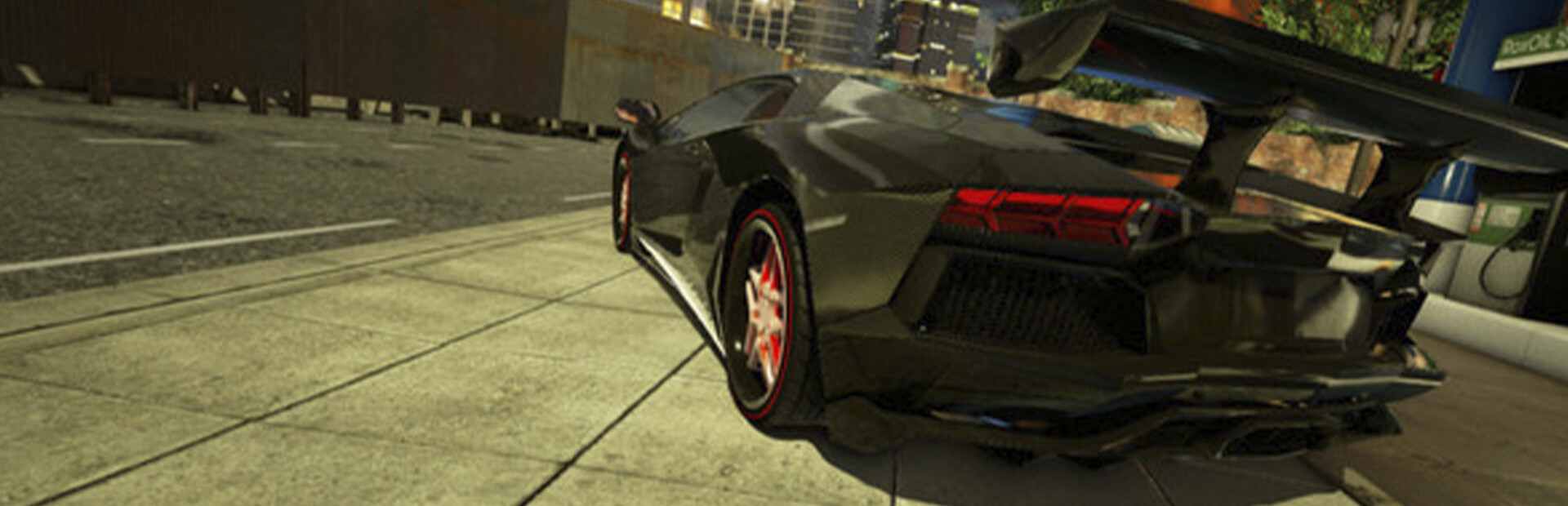
Visually, Nash Racing presents itself competently for a low-budget indie title. Built with Unreal Engine, the game features glossy car models, clearly defined tracks, and environments that are serviceable rather than spectacular. The emphasis is on functionality and clarity rather than visual spectacle. Multiple camera perspectives, including third-person and cockpit views, allow players to choose their preferred angle, which can significantly affect comfort and performance. While the presentation lacks the polish and dynamism of larger racing franchises, it succeeds in conveying speed and track layout in a readable way.
Where the game begins to show its limitations most clearly is in its artificial intelligence and overall polish. AI drivers often behave inconsistently, sometimes offering little resistance and at other times acting unpredictably. This uneven challenge can reduce the satisfaction of victories and diminish the competitive tension that racing games thrive on. Technical roughness, including minor bugs and performance hiccups, further detracts from immersion. These issues do not necessarily make the game unplayable, but they contribute to a sense that the experience feels unfinished or under-refined in places.
Sound design and feedback are functional but minimal. Engine noises, collision effects, and ambient sounds serve their purpose but lack variety and impact. The audio does little to heighten excitement during races, which can make longer sessions feel flat. Combined with the absence of a strong progression framework or narrative context, this means that the game relies almost entirely on the intrinsic enjoyment of racing itself to maintain player interest.
Despite its shortcomings, Nash Racing has a certain appeal for players who appreciate simplicity and low commitment. Its controls are easy to grasp, the learning curve is gentle, and the time trial mode offers a clear reason to keep improving. For players who enjoy shaving seconds off lap times or who want a no-frills racing experience without the demands of realistic simulations, the game can provide short bursts of entertainment.
In the end, Nash Racing stands as a modest indie effort with a clear vision but limited execution. It delivers the essentials of arcade-style racing—cars, tracks, and competition—without expanding far beyond that foundation. While inconsistent AI behavior and technical issues prevent it from standing out in a crowded genre, it remains a playable and occasionally enjoyable option for those curious about small-scale racing games. Approached with measured expectations, it offers a glimpse into indie development ambition, even if it never fully capitalizes on its potential.
Rating: 5/10